
Health update; the illness I have is stage 4 prostate cancer, which means it has spread and cannot be 'cured' or entirely eliminated, at least not by current medical practice. It can, however, be slowed down with the treatment I have received which is chemo-therapy and hormone injections. The hope is that we are able to slow the cancer enough so that by the time it grows again there are new treatments available. Having been done with the chemo-therapy now for over six months, I am starting to feel quite well and able to be in the shop working on rods as well as in the darkroom printing & developing photographs. I expect to list two model 762-3df HB quads in the coming months (both now sold or spoken for) and will be working on new rods going forward as well, so please check this site for current rod production as it becomes available. I have also posted a lot more work on the 'Street Level Photos' page of this site if you care to see this other aspect of my work. I very much appreciate the prayers, well-wishes and caring notes received from many of you; it means a lot and I thank you.
I have been diagnosed with a serious but treatable illness and because of this I will no longer be accepting new tackle for consignment sale. I will need to focus my time and energy on treatment and other priorities for the foreseeable future. Rods and reels already listed on the site will stay until sold and shipped to new owners and consignors paid as usual.
I have also decided to sell the lion’s share of my personal collection of rods and reels. Because of the time and energy required and so I can focus on my healing process, this sale will be handled by Nate Stansfield of Freestone Vintage Tackle who I have gotten to know and trust over the last several years. You can visit his site by going to (https://www.freestonevintagetackle.com/) There are a healthy number of Brandin rods of various descriptions as well as many rods from classic and more modern makers that I have treasured for years as well as some rare and unusual reels.
The remainder of Tom Clark’s collection will also be handled by Nate. Please do check his site regularly in the coming months as there will be a great deal of rare and very hard to find tackle listed.
I have been diagnosed with a serious but treatable illness and because of this I will no longer be accepting new tackle for consignment sale. I will need to focus my time and energy on treatment and other priorities for the foreseeable future. Rods and reels already listed on the site will stay until sold and shipped to new owners and consignors paid as usual.
I have also decided to sell the lion’s share of my personal collection of rods and reels. Because of the time and energy required and so I can focus on my healing process, this sale will be handled by Nate Stansfield of Freestone Vintage Tackle who I have gotten to know and trust over the last several years. You can visit his site by going to (https://www.freestonevintagetackle.com/) There are a healthy number of Brandin rods of various descriptions as well as many rods from classic and more modern makers that I have treasured for years as well as some rare and unusual reels.
The remainder of Tom Clark’s collection will also be handled by Nate. Please do check his site regularly in the coming months as there will be a great deal of rare and very hard to find tackle listed.
RODS AND REELS CURRENTLY IN STOCK
Please note the announcement above
I accept high quality rods and reels for consignment sale on this website. If you have high quality rods by any of the recognized classic makers such as Eustis Edwards, Dickerson, Payne, F.E. Thomas, Gillum, Garrison, Leonard, E.C. Powell, Winston, G.H. Howells or others and you are looking to sell the rod, please contact me. The same goes for reels by Hardy, Bogdan, Saracione, etc. My new commission structure as of Feb 14, 2022 is 12½% for sales at any price point with a $150 listing and photography fee which is not collected until the item sells. Tackle consigned to me is expected to be left with me for a minimum of 6 months.
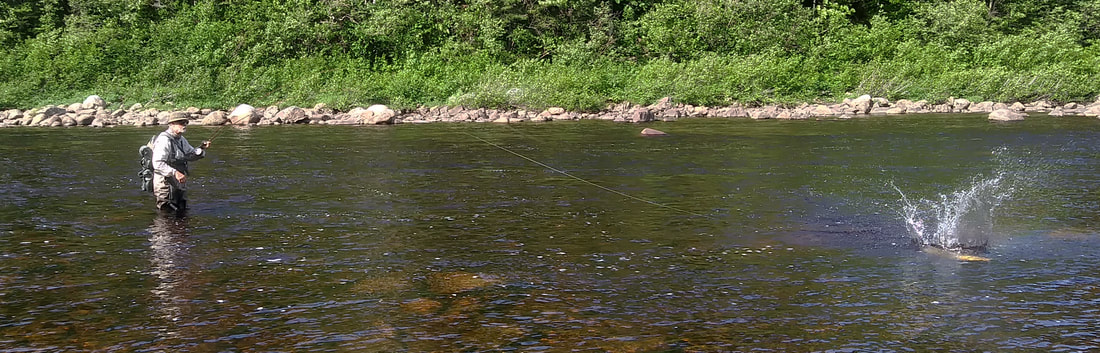
Photo by Daryl Burry
I try to describe rods and reels as completely and accurately as possible; in case of any discrepancy, however, I offer a three day inspection period during which time the item may be returned for a full refund, minus shipping costs. Please note that all customs duties, inspections, etc. are the responsibility of the buyer in international sales. Also please note that all international sales will be shipped insured and declared for the full price paid; please don't ask me to do otherwise. Within the USA I usually ship via registered mail for items valued over about $2000, because of insurance costs; for items below this value I will ship via normal Priority Mail with the United States Postal Service. If UPS is the desired shipper, costs are a bit higher than with the post office. Massachusetts residents must also pay a 6.25% sales tax. Shipping to Europe or Japan is usually in the $100-$175 range if I can ship using the U.S. Postal Service; cost is a bit higher if I need to ship via UPS (the USPS will only insure packages up to a few hundred dollars to many international destinations). Please note that all international packages valued over $2500 must be shipped via UPS. Payment may be made by credit card, paypal, wire transfer, personal check, money order, or international bank check. I list rods at what I feel are fair prices; I am still willing to at least consider intelligent offers, however, so if you see a rod or reel you really want but can't quite go to the full asking price, please make an offer and it will be respectfully considered.
If interested in any of the rods or other items listed below, please call me at (413)625-6259 or email to per2@comcast.net. If phoning and no answer, be aware that this is the rod-shop phone in a one man shop and I am not always available to answer. Please try again if no answer, or leave a message and I will get back with you.
Each item listed will have one or more photographs illustrating the rod or reel for sale; the photos appear below the description of the item. If you are interested in one of the following offerings and want more visual information, feel free to request additional emailed photographs of the item. Let me know if there are any particular details you wish me to emphasize in taking the photos. Note that if there is more than one photo of an item, these smaller images can be enlarged by simply clicking on them.
If interested in any of the rods or other items listed below, please call me at (413)625-6259 or email to per2@comcast.net. If phoning and no answer, be aware that this is the rod-shop phone in a one man shop and I am not always available to answer. Please try again if no answer, or leave a message and I will get back with you.
Each item listed will have one or more photographs illustrating the rod or reel for sale; the photos appear below the description of the item. If you are interested in one of the following offerings and want more visual information, feel free to request additional emailed photographs of the item. Let me know if there are any particular details you wish me to emphasize in taking the photos. Note that if there is more than one photo of an item, these smaller images can be enlarged by simply clicking on them.
Rods
IF YOU CONTACT ME THROUGH THE 'CONTACT ME' LINK ON THIS SITE AND DON'T HEAR BACK FROM ME, PLEASE EMAIL ME AT per2@comcast.net
When there are Brandin rods available, they will be listed first, followed by other classic rods in order of ascending length and in alphabetical order.
~~~~~~~~~~~~~~~~~~~~~~~~~~~~~~~~~~~~~~~~~~~~~~~~~~~~~~~~~~~~~~~~~~~~~~~~~~~~~~~~~~~~~~~~~~~~~~~~~~~~~
IF YOU CONTACT ME THROUGH THE 'CONTACT ME' LINK ON THIS SITE AND DON'T HEAR BACK FROM ME, PLEASE EMAIL ME AT per2@comcast.net
When there are Brandin rods available, they will be listed first, followed by other classic rods in order of ascending length and in alphabetical order.
~~~~~~~~~~~~~~~~~~~~~~~~~~~~~~~~~~~~~~~~~~~~~~~~~~~~~~~~~~~~~~~~~~~~~~~~~~~~~~~~~~~~~~~~~~~~~~~~~~~~~
Please note that I can now accept payment via credit cards as well as through Paypal with no fee for domestic sales.
Please go to the 'E.C. Powell Book' page on this website to purchase copies of my book A Fly Rod With a Soul about the fishing rods and life of E.C. Powell, the extraordinary rod designer, caster and angler. I have plenty of the trade edition still available while the Limited and Deluxe editions are now sold out.
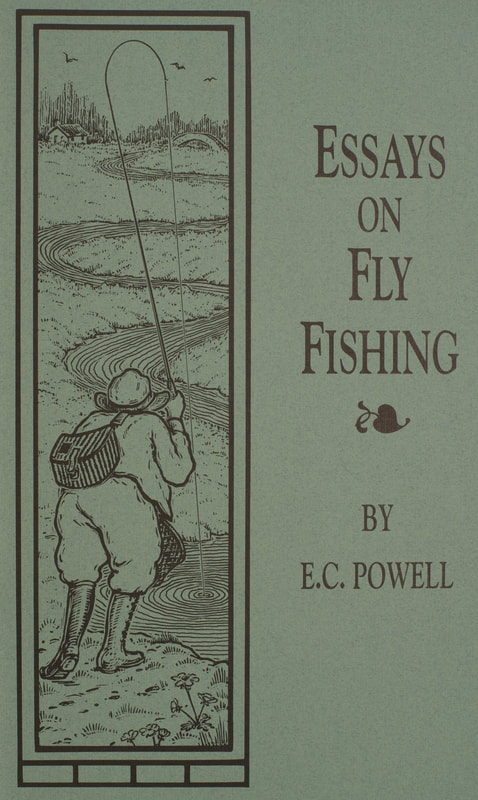
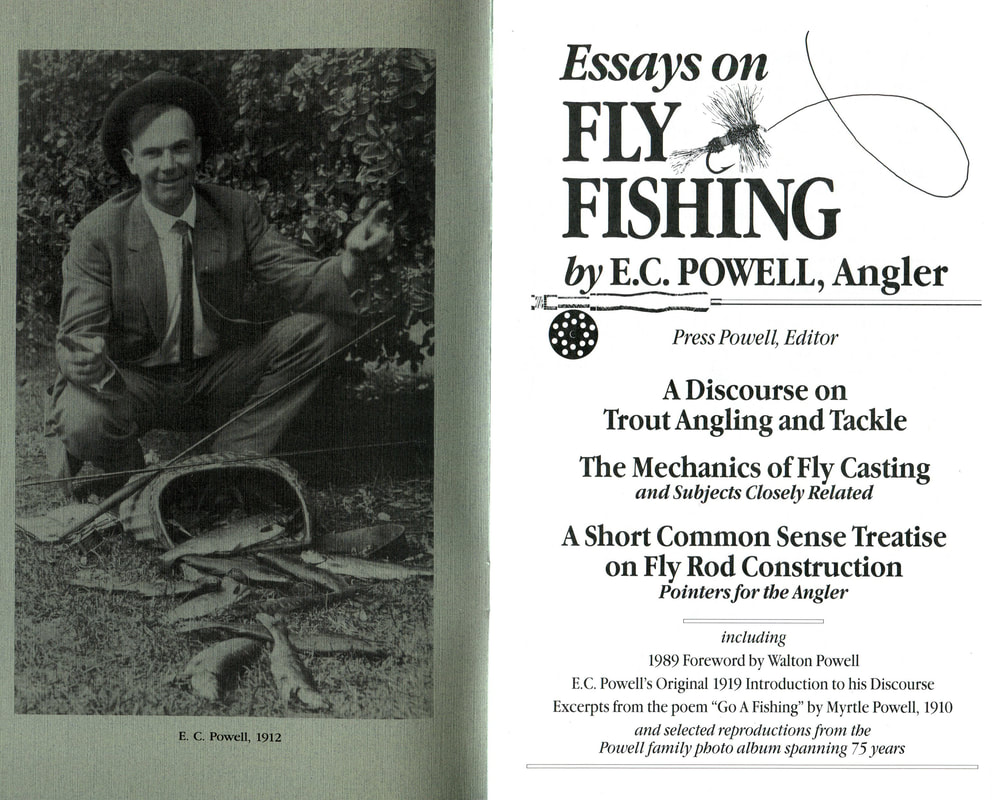
Note that I have a few of the E.C. Powell "Essays on Fly Fishing" pamphlets edited by Press Powell and produced in the 1990's for sale at $25.00 ea. You can see scans of these between the rod listings and reel listings on this page.
Some reels reduced in price!
Newly listed reels: Hardy 3⅛ in Uniqua; Hardy St George 3 inch; Hardy Perfect 2⅞ inch
If interested in a most distinctive fishing jacket, go to my link on this page "Gobillot Designs Fishing Wear."
Rods
For Sale:
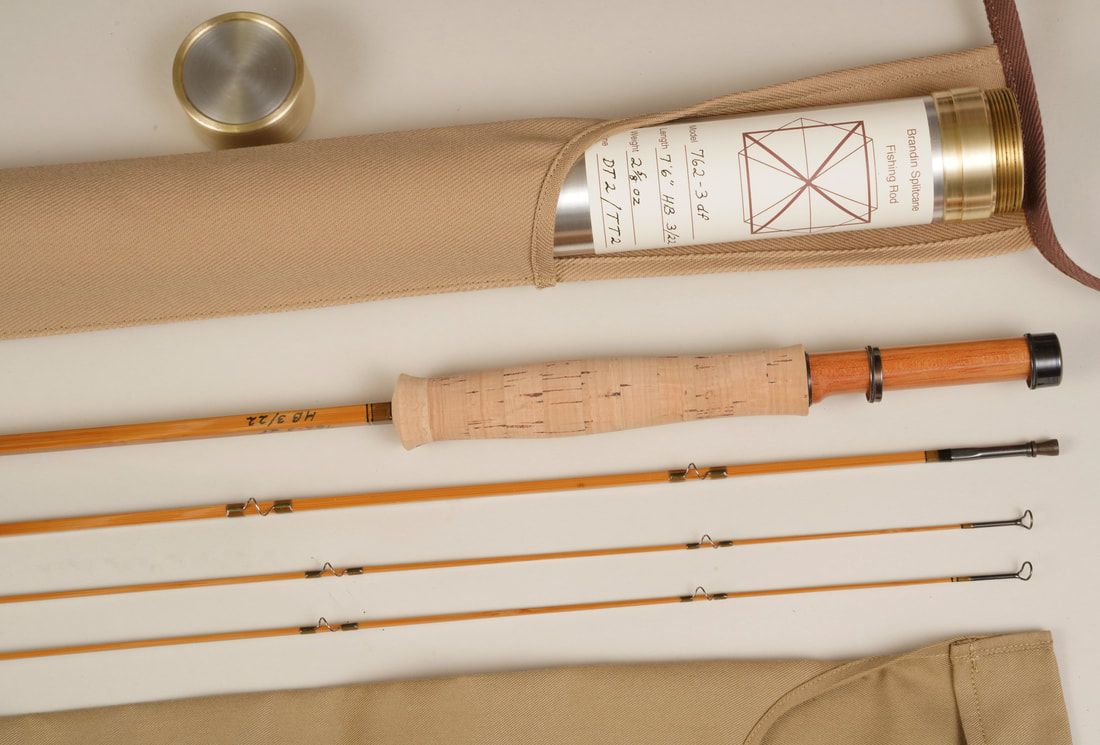
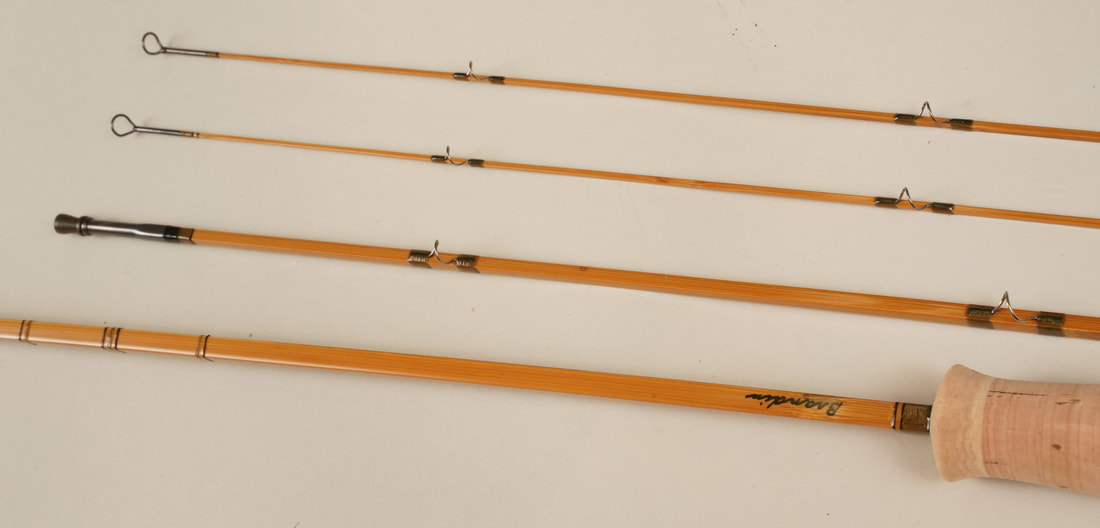
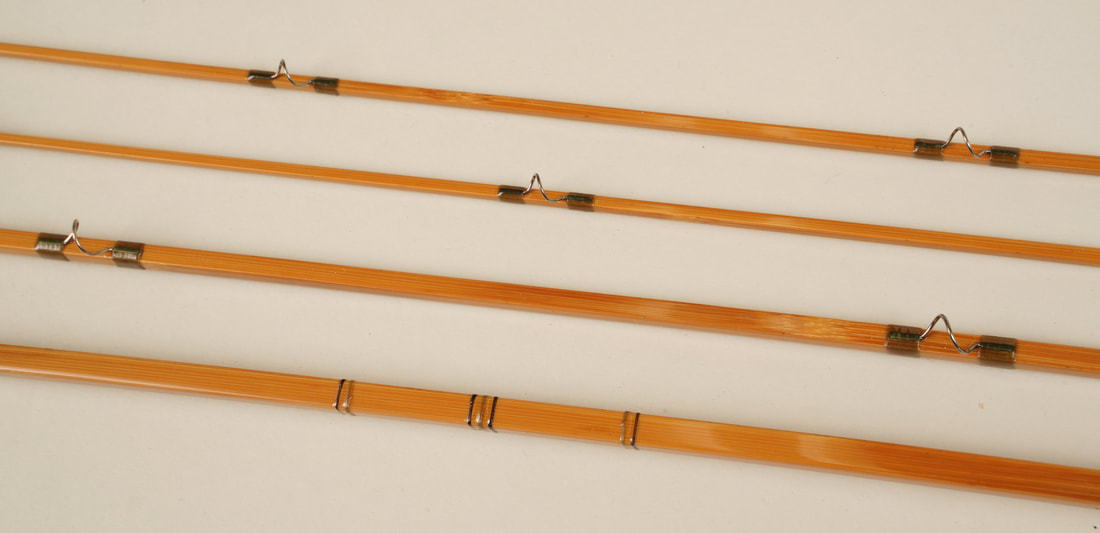
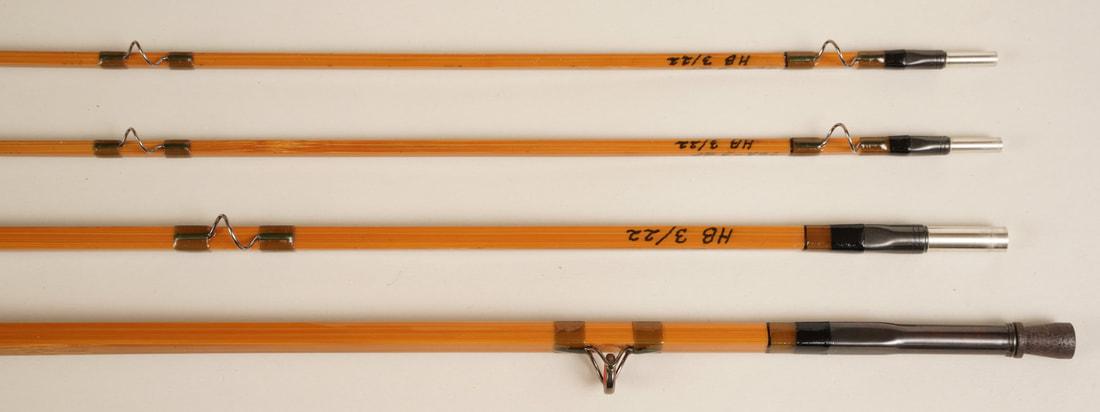
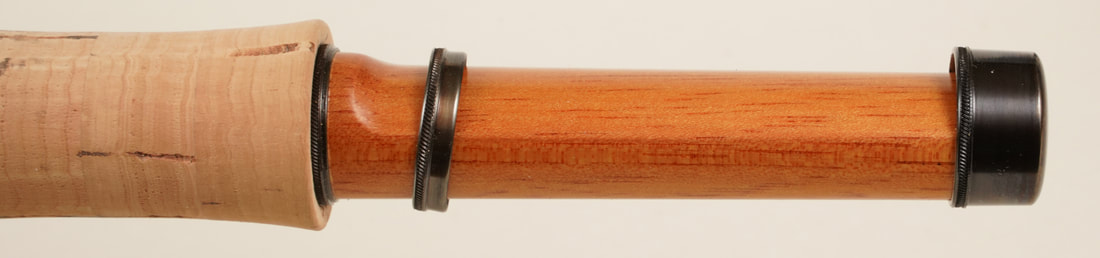
~Brandin 762-3df HB, 7½ ft. 3pc/2tips for #2 line at 2⅝ oz. This is a semi-hollow quad started in 2022 and finished in 2023; it is not flamed, but rather oven heat treated only, so a deep straw color. This is the lightest action quad I have built to date as a standard model and it is the lightest action quad I know of from any maker outside of a couple #1 line ‘one-off’ rods built by yours truly. I feel it is one of the sweetest casting rods I have built, perhaps the sweetest and it will be a delight on smaller waters. Agate stripping guide and light wire black nickel snakes under my standard translucent olive silk wraps with standard tipping at ferrules and grip as well as my standard signature wraps. It has a light mahogany 'monkey-pod' reel-seat filler with abbreviated blued n/s butt cap and 'wedding band' slide band. In new, mint condition with original bag and labeled tube as well as outer tube bag. $6,950 SOLD

|
|
|
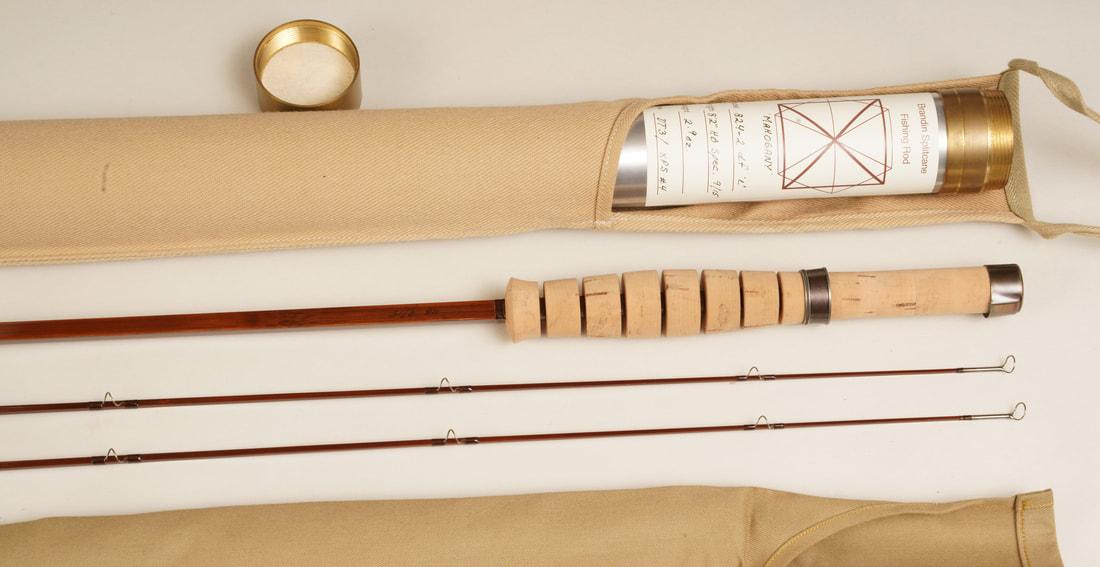
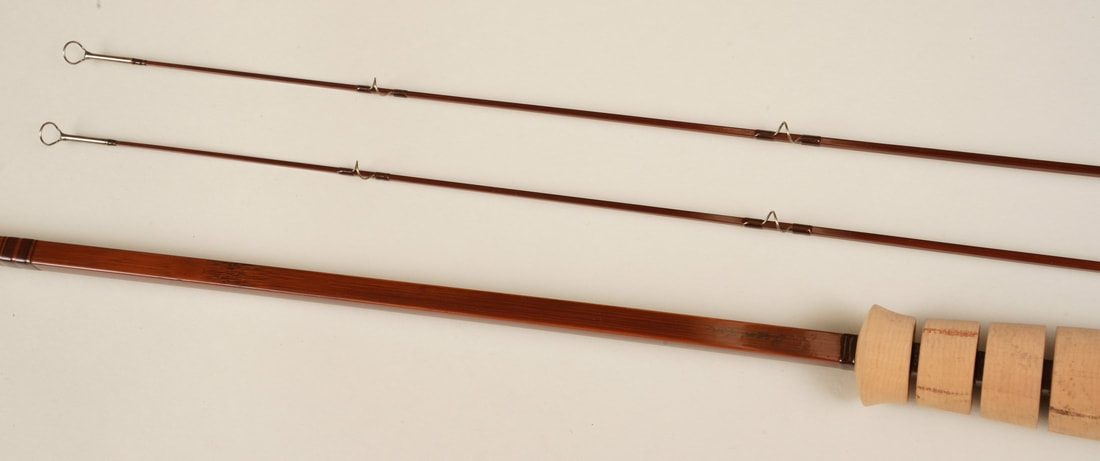
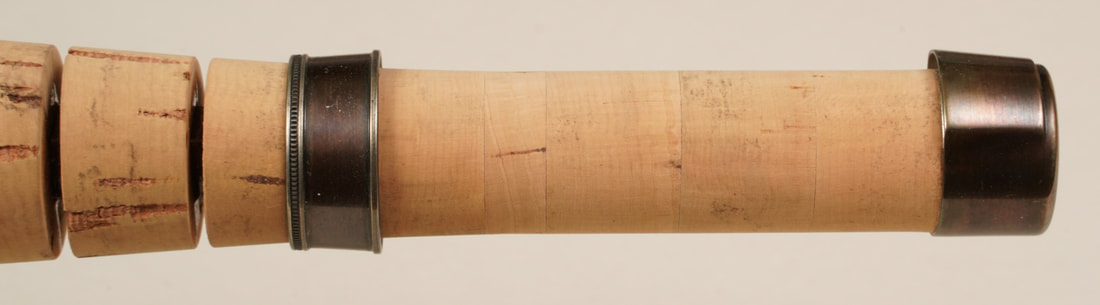
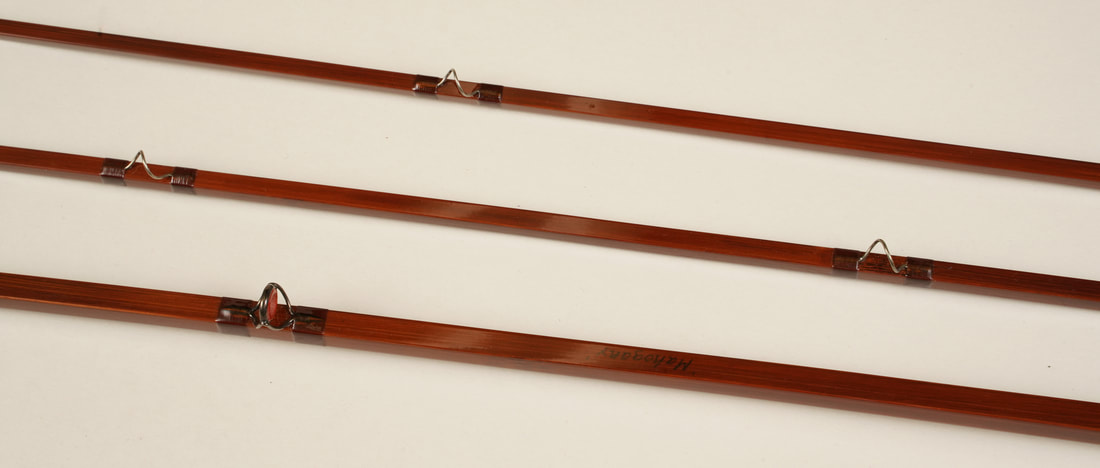
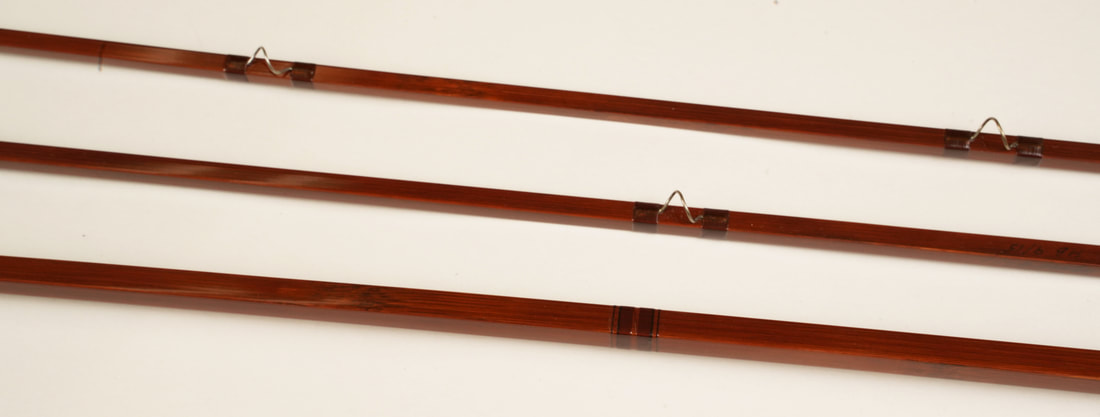
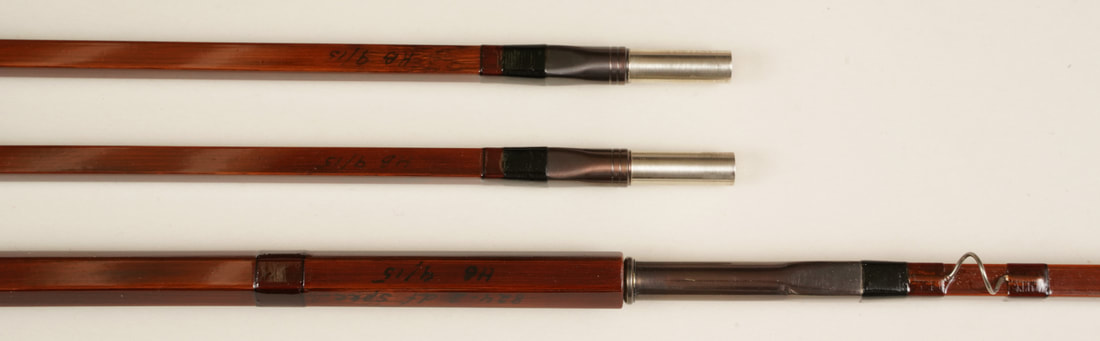
~Brandin 824-2df 'L' HB Special, 8ft. 2in., 2pc/2 tips staggered ferrule, semi-hollow quad for light #4 line at 2.9 oz. This rod has been in my personal collection since its build in 2015. It has the 'Mahogany' finish and is about as pretty a trout rod as I have ever built. Note that the rod is a staggered ferrule design, which brings the weight of the ferrule closer to the hand, resulting in a very light, pleasant feel to the rod. Because the tips are much longer than the butt, a semi-hollow, hexagonal bamboo ferrule plug is supplied to make up the difference in length between butt and tips; keep this ferrule plug mounted when the rod is not in use to protect the fine tips. When the rod is in use, please use the slot in the rod bag next to the stiffener to store this ferrule plug. Grip is ventilated and employs higher quality French cork produced in-house with my own cork process. Slide band is wider than standard to minimize denting the cork reel-seat. In original bag and labeled tube with outer tube bag. $8,950 SOLD
|

|
|
Photographic Prints
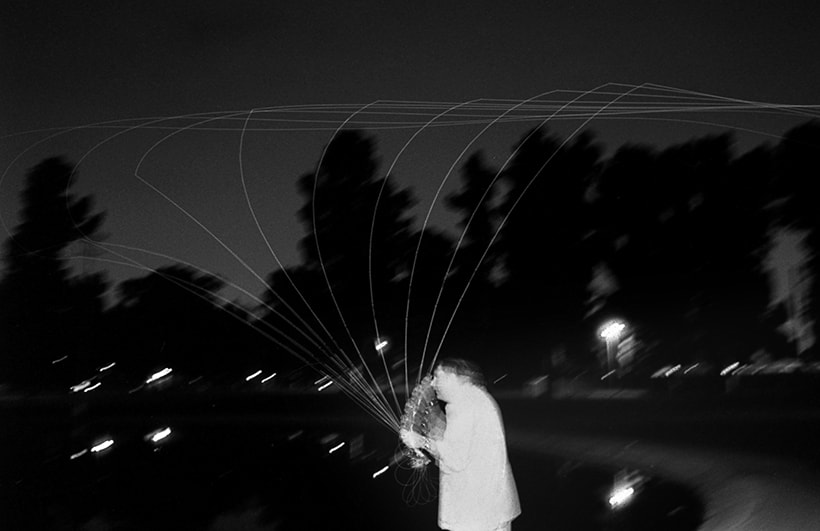
Photographic Prints~Per Brandin B&W print. Stroboscopic view of John Napoli casting my Tournament Trout Fly Rod at the Long Beach Casting Club about 1995. Signed digital print image size 13X20 inches, paper size 17X22 inches. Suitable for mounting or framing. Signed. $475 SOLD, but other prints of this image are available.
Note that there are many more photographs displayed on the 'Street Level Photos' page of this website. I am currently in the process of re-organizing and expanding that page to show more of my work.
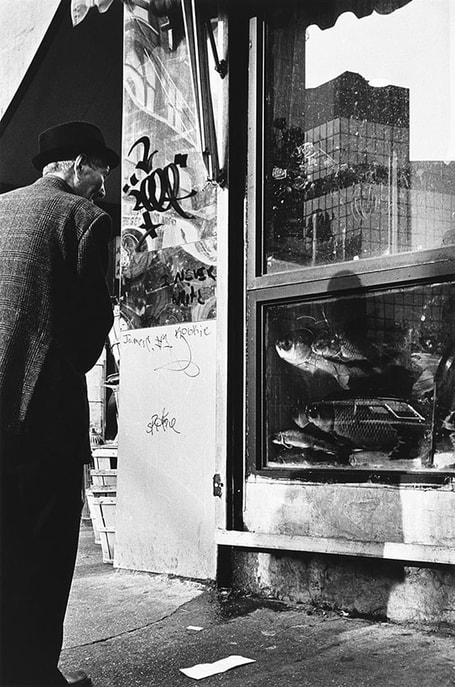
~Per Brandin B&W print. 'Fish Watches Man'; Chinatown, NY City 1980. Image size 33X22 inches. Digital print suitable for mounting or framing. Perhaps my single favorite image. Signed. $795 SOLD / A larger signed version at 42x28 inches is available for $1,125 Original silver prints of this image are in the collections of the Bibliotheque Nationale in Paris, France and of the Neue Sammlung in Munich, Germany.
|
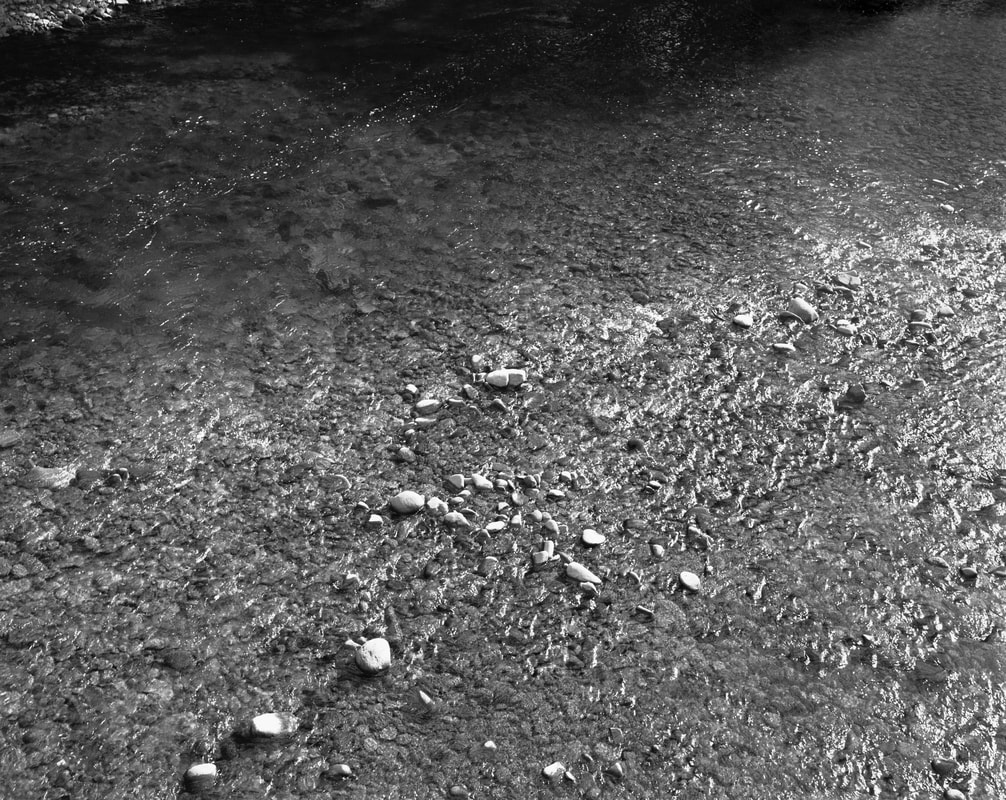
Shin Creek enters the upper Beaverkill river at Lew Beach, New York, 2002. Available as silver gelatin or digital print.
I have many other prints available for sale, both in digital and silver print modes; please see the section of my website I call 'Street Level Photos' for more information.
E.C. Powell Essays on Fly fishing, edited by Press Powell
I have several of the E.C. Powell pamphlets from the 1990's edited by Press Powell at $25.00 each. This is a great and useful compendium of the better known essays written by E.C., including A Discourse on Trout Angling and Tackle, The Mechanics of Fly Casting, and A Short Common Sense Treatise on Fly Rod Construction. This pamphlet also includes some other writing from the Powell family, as well as photographs from the Powell family archive.
|
|
Reels
No reels are currently available.
